
- Resources
FHA Manufactured Home Guidelines
Buying a manufactured home with an FHA loan is a great option for borrowers, but there are requirements that must be met by both the borrower and the home.
 Hero Home ProgramsUpdated 7 min read
In this article
FHA loans are designed to help those without a large down payment and less than optimal credit score achieve home ownership. While these loans do apply to traditional “stick-built” homes, borrowers looking for lower-cost alternatives often turn to manufactured or modular homes in order to meet the mortgage requirements and get the keys to a new home. While this does offer a great alternative to a traditional home, there are specific guidelines that manufactured or modular homes must meet in order to achieve mortgage loan approval.
What is a manufactured home?
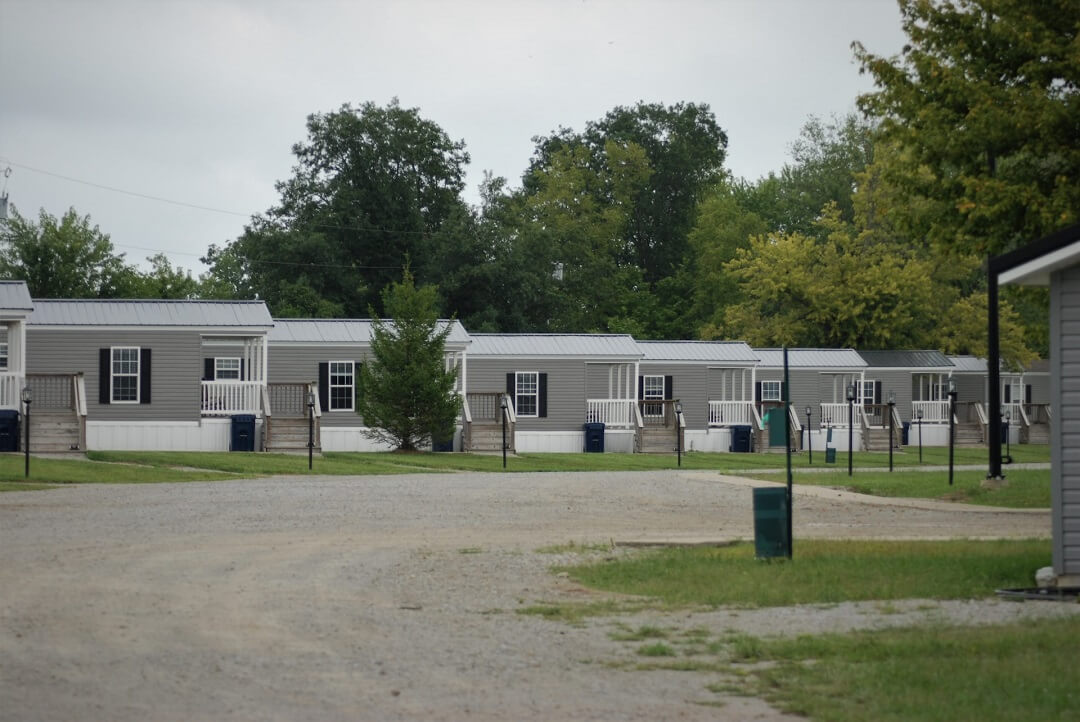
Manufactured homes, often referred to as mobile homes, are homes built in a factory and can come in multiple pieces put together at their location. They are built to the national HUD code and must contain a red HUD certification label on each section. The home must be connected to water, sewer, and electric power and have a source of heating. They must be a single-family dwelling and can be placed on a rented piece of land, such as in a manufactured home park, or on a piece of land owned by the buyer.
Manufactured homes vs. modular homes
Manufactured, or mobile homes, are built to the HUD Code and require that the home be constructed on a permanent chassis. Modular homes are constructed following the same state, local, or regional building codes that traditional stick-building construction follows. These homes are built in pieces without a permanent chassis and are transported to their location on flatbed trucks. Modular homes must be placed on a permanent foundation and will have a Data Plate attached to show the modular meets the strict building codes.
How FHA manufactured home loans work
FHA manufactured home loans work similarly to a traditional single-family home loan. The FHA offers two different programs for manufactured homes: Title I and Title II. A Title II loan is a regular FHA mortgage: the home must be on a permanent foundation and is financed together with the land as real estate, so you get standard FHA terms (up to 30 years) and the usual FHA loan limits. A Title I loan can finance the home alone, the lot alone, or both, and the home does not have to sit on land you own. For example, with Title I, your manufactured home can be placed on a lot you lease in a manufactured home community. Title I loans have lower maximum amounts and shorter terms, and fewer lenders offer them.
What are FHA guidelines for manufactured homes?
FHA Title II loans for manufactured homes follow similar guidelines to those required for a traditional “stick-built” home. Down payments can be as low as 3.5% with a credit score of 580 or higher (10% down with a score of 500 to 579), although many manufactured home lenders set their own higher minimums, often around 620 to 640. DTI limits generally start around 43%, with higher ratios possible when you have compensating factors. The manufactured home must be used as the borrower’s primary residence, and Title II borrowers pay two types of mortgage insurance: an upfront mortgage insurance premium (UFMIP) and an annual mortgage insurance premium (MIP).
Are you eligible?
Before considering an FHA manufactured home mortgage, you want to be sure you meet the eligibility guidelines for an FHA mortgage. Meeting these initial requirements will allow you to move forward and find a manufactured home that meets other specific guidelines.
FHA home loan requirements
FHA lenders have a variety of different requirements when it comes to purchasing a home, whether it is stick-built or manufactured. Here we take a look at these requirements and what is necessary to qualify for an FHA manufactured home mortgage.
Standard FHA requirements
The FHA has minimum property standards that must be in place for any FHA mortgage. These basic requirements focus on safety, security, and soundness. A home, whether stick-built or manufactured, must protect the health and safety of any occupants. In addition, the home should provide security to the occupants while being free of any physical deficiencies that affect the structural integrity of the home.
FHA manufactured home requirements
When it comes to specific requirements for a manufactured home, there are a lot more things to consider. These requirements include:
- The home must be built on or after June 15, 1976
- It must adhere to the Manufactured Home Installation Standards (and, for Title II, sit on a permanent foundation that meets HUD’s guidelines)
- There must be a red HUD certification plate attached to every section of the home
- The home must be a single-family dwelling
- The manufactured home must be at least 400 square feet
- The home must be connected to a water and sewer system approved by the FHA
- If the home is new, it must have a one-year warranty
Special FHA mobile home loan requirements
In some cases, your manufactured home may still be treated as personal property rather than real estate. This happens when you place your home on rented land or a non-permanent foundation, which generally means a Title I loan. In this case, HUD requires the lot lease to have an initial term of at least three years and to give you at least 180 days’ written notice before it can be terminated.
Pros and cons of manufactured housing
Buying a manufactured home comes with a variety of pros and cons every borrower must consider.
Pros
- Affordability: Manufactured housing typically costs much less per square foot than site-built construction, meaning you can get more home for your budget.
- New construction is predictable: Unlike cost overruns that are common with new site-built construction, manufactured home builders provide the upfront cost of a manufactured home, including delivery and set-up before construction begins, without the risk of price changes.
- Energy efficient and eco-friendly: By taking advantage of new technology, manufactured home builders incorporate environmentally friendly materials and technology in their construction while also working to provide energy-efficient methods that help homeowners keep utility costs down.
Cons
- Design: Unlike traditional stick-built homes where the sky is the limit when it comes to design options, manufactured homes are often limited to predetermined floor plans.
- Depreciation: Manufactured homes on leased land often lose value over time, much like a vehicle. Homes on land you own and on a permanent foundation tend to hold their value better and can appreciate along with the land.
- Locations may be limited: Where you put your manufactured home can often be limited by zoning ordinances. Even if you own the specific property, if it is not zoned for manufactured homes, then you are out of luck.
Alternatives to FHA manufactured home loans
When it comes to financing a manufactured home, you are not limited to an FHA-approved loan. Other mortgage alternatives are available and, for those with higher credit scores, may offer better rates and terms.
Conventional loans
Conventional loans sponsored by Fannie Mae and Freddie Mac offer borrowers with higher credit scores much more favorable mortgage terms that include lower interest rates, down payments as low as 3%, and private mortgage insurance for a lower price than is offered with an FHA mortgage. Fannie Mae’s MH Advantage program, for manufactured homes built with site-built features, offers qualified borrowers a 3% down option with reduced mortgage insurance coverage, and Freddie Mac also buys loans on eligible manufactured homes. Requirements vary by program, so ask your lender which options fit the home you’re considering.
VA loans
For veterans and eligible military borrowers, a VA loan can finance a manufactured home with no down payment if you have full entitlement and the lender agrees. However, the home generally needs to be on a permanent foundation and classified as real estate together with land the borrower owns.
USDA loans
For borrowers living in certain rural areas, a manufactured home loan from the U.S. Department of Agriculture may offer the perfect financing option. In an eligible rural area, a USDA loan requires no down payment to buy a new (or, in some cases, recently built) manufactured home permanently placed on land the borrower owns. Borrowers will, however, need to meet the USDA income requirements in order to qualify for this mortgage option.
Finding the best manufactured home loan
If you are considering a manufactured home, an FHA mortgage can be the best option for those with less-than-perfect credit. However, the other alternatives, such as USDA or conventional loans, can help save you money in the long run.
Navigating the homebuying process
Navigating the home-buying process can be difficult, but if you are considering a manufactured home, the additional requirements can often be overwhelming, especially for first-time home buyers. At Hero Home Programs, our goal is to help everyone achieve home ownership and our team of experts is here to help you find the best financing options for your new manufactured home. To learn more about how we can help make your home-buying process run smoothly, book a consultation today.